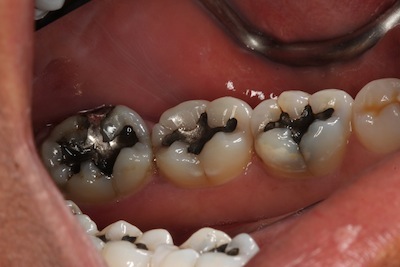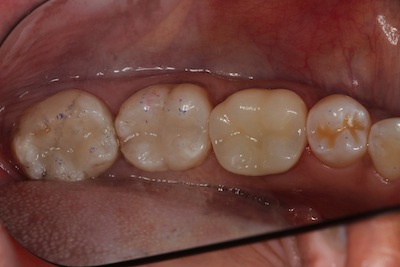
Composite fillings are used to treat cavities and replace existing fillings that have worn out or failed over time. Because they are tooth-colored, they blend naturally with the surrounding tooth structure.
A filling may be recommended when tooth decay has created a cavity or when an existing filling has broken down, leaked, or developed decay around it.
Composite fillings bond directly to the tooth and can often be completed in a single appointment.
Like any restoration, there are limits to how large a filling can be placed while still providing predictable long-term support. When a tooth has extensive decay or significant loss of tooth structure, an onlay or crown may be recommended instead.
With proper home care and regular dental examinations, tooth-colored fillings can provide many years of service.
Composite fillings are tooth-colored and designed to blend naturally with the surrounding tooth structure.
The lifespan of a filling depends on its size, location, bite forces, and oral hygiene habits. Regular examinations allow us to monitor fillings for wear and breakdown.
When too much tooth structure has been lost, a filling may not provide enough support. In those situations, an onlay or crown may offer a more predictable long-term solution.